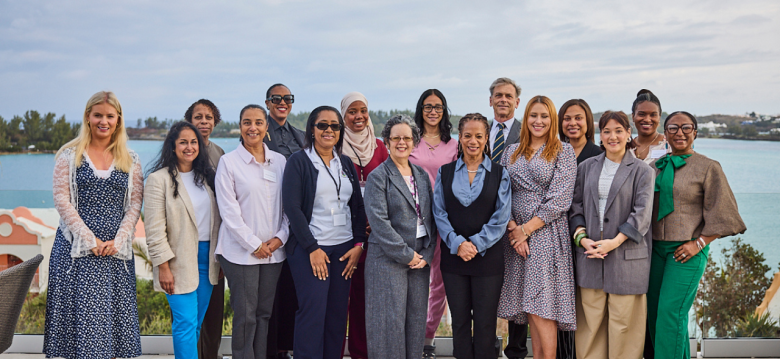
The Ministry of Health, together with the Centre Against Abuse and the United Kingdom Health Security Agency, recently completed a three‑day “Train the Trainers” course led by IRISi. IRISi is a UK charity that helps health systems respond better to violence against women and girls. Their visit is the first step toward testing the IRIS programme in Bermuda’s health services. The training helped local healthcare workers and advocates learn how to spot signs of domestic abuse, respond safely, and connect people to the right support.
Domestic abuse continues to affect many people in Bermuda. About 27% of women, roughly one in four, will experience abuse at some point in their lives, and around 3,000 women are affected each year. More people are also seeking legal protection. The number of Domestic Violence Protection Orders has risen from 91 in 2022 to 140 between January and November 2024. Childhood trauma is also common. The Bermuda ACEs Study found that 60% of adults lived with serious problems at home as children, 80% saw traumatic events, 12.3% often witnessed physical abuse, and 40% experienced child sexual abuse. These numbers show why strong, trauma‑informed support systems are needed.
“Domestic abuse is a serious public health issue, and healthcare workers are often the first people survivors turn to,” said the Minister of Health, the Hon. Kim N. Wilson, JP, MP, “I want to thank the Department of Health for helping to bring this training to life, and I also want to thank IRISi for sharing their expertise with Bermuda. By working together, we are building a safer, more supportive system that puts people’s wellbeing first.”
During the three‑day course, participants learned how the IRIS programme works, including the roles involved, how to run steering group meetings, how to train staff, and how to collect and monitor data. Advocate Educators also received special training on how to guide and support patients who have experienced abuse. The sessions helped the Bermuda team understand the health impacts of domestic abuse, the barriers that keep people from speaking up, and how to adapt the programme to local needs.
The pilot phase of the IRIS programme will begin later this year. The goal is to improve early identification of abuse, strengthen referral pathways, and support closer teamwork between healthcare providers and domestic‑abuse services.